Table of Contents
ToggleModern gas fireplaces have moved far beyond the basic insert-and-forget aesthetic of years past. Today’s designs merge functional heating with striking visual impact, giving homeowners multiple ways to anchor a room and set the tone for the entire home. Whether you’re drawn to minimalist linear styles, space-saving corner units, or outdoor installations that extend living areas year-round, gas fireplaces offer flexibility and clean operation that wood-burning alternatives simply can’t match. This guide walks through contemporary gas fireplace ideas that work across different layouts, styles, and budgets, helping you find the approach that fits your space and vision.
Key Takeaways
- Modern gas fireplace ideas blend functional heating with striking visual impact, offering minimalist linear styles, corner units, and outdoor installations that transform any living space.
- Linear gas fireplaces deliver maximum design drama by stretching 4 to 8 feet horizontally and heating 1,000 to 2,000 square feet, making them ideal focal points for contemporary homes.
- Corner and built-in gas fireplace designs maximize small spaces by utilizing dead areas while creating opportunities for integrated storage, shelving, and seamless room architecture.
- Stainless steel, matte black, and minimalist surrounds paired with concrete or large-format tile create modern aesthetic appeal that coordinates with contemporary hardware and fixtures.
- Outdoor gas fireplaces extend year-round living spaces with minimal maintenance compared to wood-burning alternatives, offering freestanding or custom built-in options that serve as functional gathering points.
- Proper venting, professional installation, and code compliance are essential for gas fireplace projects; consult a licensed installer to confirm feasibility before committing to any design.
Linear Gas Fireplaces: The Sleek Statement Piece
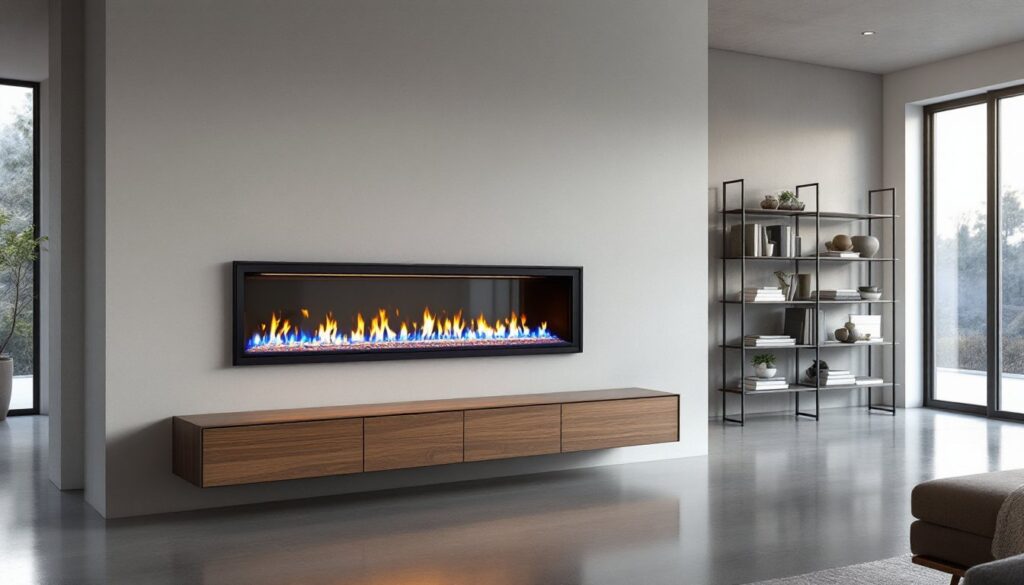
Linear gas fireplaces have become the go-to choice for modern interiors because they deliver maximum visual drama with minimal visual clutter. Unlike traditional box fireplaces with visible vents or decorative mantels, a linear unit sits flush to a wall and stretches horizontally, often 4 to 8 feet across, creating a clean, uninterrupted line of flame and glowing glass.
The appeal is twofold: design and function. A single linear unit heats 1,000 to 2,000 square feet (depending on BTU output and room insulation), so you’re getting real warmth alongside the ambiance. The flame runs the full width of the unit, which feels more generous and immersive than a small firebox. Many modern linear fireplaces feature variable flame heights and adjustable logs or media (glass, stones, or ceramic shapes), so you control the visual intensity to match your mood.
Installation typically requires venting to the exterior, either a standard chimney vent or a more flexible power vent system that can route through a sidewall or roof. Direct-vent models, which draw combustion air from outside and exhaust outside, are the most efficient and require less makeup air than natural-vent units. If your home lacks existing chimney infrastructure, talk to your HVAC or fireplace installer about venting options: this is not a DIY retrofit job.
Linear units work brilliantly as room dividers in open-concept homes, floating media walls, or as the focal point above a low-slung credenza. The sleek frame (often in matte black, stainless steel, or brushed aluminum) coordinates with contemporary cabinetry and accent walls. Price range typically spans $3,000 to $8,000 for the unit itself, with installation adding $1,500 to $3,500 depending on venting complexity and finishing work.
Corner and Built-In Designs for Smart Space Planning
Not every room has a blank wall, and not every homeowner wants a focal-wall treatment. Corner gas fireplaces solve both challenges by tucking the unit into an otherwise dead space, freeing up wall real estate while still delivering warmth and visual interest.
Corner installations come in two main flavors: L-shaped units that run along two walls, and traditional box fireplaces rotated and mounted in the corner itself. L-shaped linear units are particularly striking in modern homes because they emphasize geometric lines and create a sense of continuity around the room. A single L-shaped unit can wrap from one wall to an adjacent wall, with flame visible from multiple seating angles.
Built-in designs go deeper: recessing the fireplace into a wall opening, framing it with custom cabinetry, shelving, or stone surrounds. This approach requires framing work and rough-in during renovation, so it’s most practical when you’re gutting a room anyway. A professional mason or contractor should assess your wall structure (and locate utilities, wiring, and plumbing) before cutting into studs or exterior walls. Venting and gas lines must be run before finish work, so front-load your planning.
Corner and built-in units save floor space in smaller homes, apartments, and open-concept kitchens. They also allow you to create storage, seating nooks, or display shelves around the fireplace, integrating it into your functional layout rather than treating it as a separate sculptural element. This approach transforms the fireplace from a standout focal point into a seamless part of the room’s architecture.
Modern Materials and Finishes
Stainless Steel and Metal Accents
Stainless steel and powder-coated metal frames have become synonymous with contemporary gas fireplaces. A brushed stainless surround around the glass opening catches light subtly and resists fingerprints better than mirror or polished finishes. Matte black powder coat is another popular choice, it absorbs light, making the flame itself the visual focus rather than the frame.
Metal legs or bases (in black, bronze, or natural steel) can elevate a freestanding or insert-style fireplace off the ground, creating a floating effect that feels lighter and more modern than sitting flush to the floor. Some units feature glass side panels that let flame and glow spill into the room from multiple angles, multiplying visual impact without adding square footage.
Choose finishes that coordinate with your kitchen hardware, cabinet pulls, or light fixtures. A brushed nickel fireplace frame matches contemporary cabinet hardware: a matte black unit pairs with modern pendant lights and minimalist hardware. Avoid mixing too many metal finishes in one room (chrome, brass, and steel clashing, for example) unless that’s intentional eclecticism.
Minimalist Surrounds and Concrete Details
Minimalist surrounds strip away ornament entirely. The fireplace sits within a simple rectangular frame or opening, no decorative trim, no stone, no built-in shelving. The surround might be drywall with clean-lined metal trim, or increasingly popular, a concrete slab or concrete-look tile that runs floor to ceiling. Concrete reads industrial and modern, and it pairs naturally with metal and glass.
Some designers and homeowners are also using large-format porcelain tile (24×48 inches or larger) to avoid grout lines that interrupt the visual sweep around the fireplace. A matte-finish porcelain in charcoal, warm gray, or even a natural stone-look creates a serene, gallery-like backdrop for the flame.
Forget the hearth extension if your local code permits it: a flush installation (where the fireplace sits at floor level with no raised platform) reinforces the minimalist aesthetic. Check your jurisdiction’s building code requirements for clearance distances and safety standards around combustible materials, rules vary, but typically you need 0 to 12 inches of non-combustible protection above the opening, depending on whether your surround is tile, concrete, or metal.
Outdoor Gas Fireplace Concepts
Extending your living space into the backyard has become a year-round project, and outdoor gas fireplaces are the linchpin. Unlike wood-burning fire pits (which require active tending, produce smoke, and attract embers), an outdoor gas fireplace ignites at the switch and runs with minimal fuss.
Outdoor fireplaces come as freestanding units, built-in masonry or concrete structures, or inserts that fit into an existing chimney or fire pit. A freestanding unit with a metal frame and glass-fronted enclosure can anchor a seating zone on a patio, while a built-in surround (stacked stone, brick, or concrete block) becomes a permanent architectural feature.
Venting outdoor units is simpler than indoors because you don’t need to route exhaust through walls and roofs, a simple vertical vent stack does the job. But, local codes may still require clearance above rooflines or proximity to combustibles, so confirm before buying or building. Natural gas lines or propane tanks supply fuel: if you’re connecting to a permanent gas line (rather than a portable propane tank), hire a licensed gas fitter to run and test the line.
Consider sight lines: position the fireplace where it’s visible from main seating areas but doesn’t create a sight line directly into the flame and glass (glare can be uncomfortable at night). An outdoor fireplace also works as an extension of your home’s style, a contemporary metal-framed unit on a modern deck, or a rustic stone surround on a traditional patio. Some homeowners integrate seating directly into the base or surround, turning the fireplace into a focal gathering point rather than just a heat source.
Outdoor units are popular among designers because modern outdoor spaces demand function and aesthetics in equal measure. Cost depends heavily on whether you’re buying a prefab unit ($2,000–$5,000) or commissioning a custom built-in structure ($8,000–$20,000+).
Conclusion
Modern gas fireplaces give you control, clean operation, and design flexibility that older heating methods don’t offer. Whether you’re drawn to a dramatic linear statement piece, a space-saving corner install, or an outdoor gathering spot, today’s options range from sleek metal-and-glass minimalism to concrete-and-steel industrial aesthetics. Start with your room layout, venting constraints, and style, then consult a licensed fireplace installer to confirm feasibility and code compliance. The result will be a functional, visually striking focal point that works as hard as it looks.