Table of Contents
ToggleYour master bathroom shower is one of the first things you see in the morning, and one of the last before bed. The right tile choice transforms that utilitarian corner into a sanctuary that reflects your style and stands up to daily moisture, temperature swings, and foot traffic. Whether you’re doing a complete renovation or refreshing tired grout, the tile you pick sets the tone for the entire bathroom. In 2026, homeowners have more options than ever: from timeless subway designs to bold patterned statements and luxury stone finishes. This guide walks you through 15 compelling shower tile ideas, breaking down what makes each work, what you’ll actually spend, and how to install them properly.
Key Takeaways
- Master bathroom shower tile ideas range from timeless subway designs to bold patterns and luxury stone finishes, with options for every budget and style preference.
- Matte finishes and textured tiles hide water spots, soap scum, and grout inconsistencies better than glossy finishes, making them practical for high-moisture shower environments.
- Natural stone and textured finishes provide unmatched aesthetic appeal and slip resistance but require professional installation, sealing, and periodic maintenance to prevent staining.
- Bold colors and patterns work best when applied to one feature wall and framed with neutral tile—using a 60/20/20 color ratio balances visual drama with restraint.
- Porcelain tiles that mimic natural stone cost $3–$8 per square foot, deliver a luxury look without premium pricing, and require no sealing or ongoing maintenance.
- Proper waterproofing, grout selection, and viewing samples in your actual bathroom lighting are essential fundamentals that determine long-term satisfaction and durability.
Modern Subway and Geometric Tiles
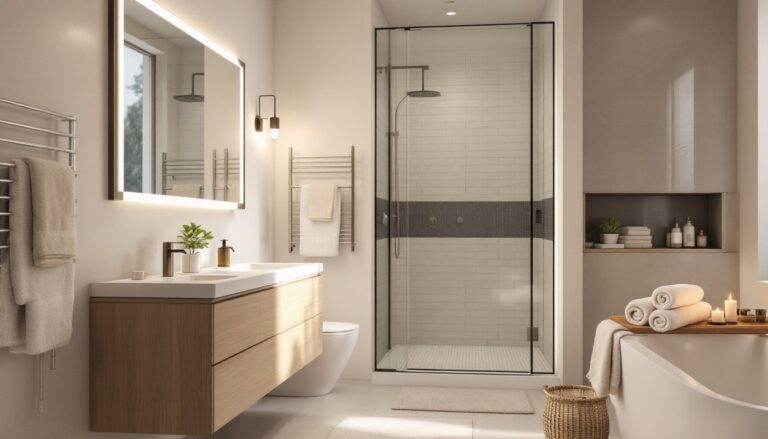
Subway tiles never go out of style, and for good reason. Their clean lines, forgiving grout joints, and neutral palette work in virtually any bathroom. Standard 3×6-inch subway tiles in white, cream, or soft gray create a timeless backdrop that pairs with any hardware or fixtures. For a modern twist, rotate them in a herringbone or stacked pattern, which adds visual interest without overwhelming the space.
Geometric tiles are having a real moment. Think hexagons, large-format squares, or elongated rectangles in matte finishes. Matte tiles hide water spots and soap scum better than glossy finishes, a practical win in a high-moisture environment. Geometric patterns also minimize the need for accent strips, the tile itself becomes the statement.
Why they work: Low maintenance, visually forgiving, and easy to find at most tile suppliers. Installation is straightforward, though herringbone layouts require more cuts and waste more material (plan for 10–15% overage). Grout color matters here, light grout on light tile recedes: darker grout (charcoal, black) creates graphic definition.
Natural Stone and Textured Finishes
Natural stone, marble, limestone, slate, or travertine, brings organic warmth that feels expensive. Honed (matte) finishes are safer than polished stone in a shower, as polished surfaces become slippery when wet. Travertine and slate, in particular, develop character over time and hide mineral deposits better than pristine marble.
Textured finishes do more than look good: they provide actual slip resistance. Look for brushed, tumbled, or split-face stone options. These also camouflage grout inconsistencies and water stains that would show on glass-smooth tiles. The downside: natural stone requires sealing before installation and periodic maintenance to prevent staining and mold growth in grout lines.
Why they work: Unmatched aesthetic appeal and durability when properly sealed. Material costs run $8–$20 per square foot (compared to $1–$5 for ceramic subway). Installation is slower because each stone piece must be individually placed, and your installer should use a stone-specific thinset mortar and grout. If budget is tight, use stone as an accent feature wall and frame it with simpler tile.
Bold Colors and Pattern Combinations
Gone are the days when shower tile had to be neutral. Deep teals, forest greens, warm terracottas, and charcoal grays create spa-like escapes without feeling trendy. The key: use bold color on one feature wall (usually behind the showerhead) and frame it with neutral subway or solid tile. This approach lets you commit to color without overwhelming a small space.
Pattern combinations, mixing two or three complementary tiles, add sophistication. Portuguese, Moroccan, or Encaustic cement tiles create visual rhythm. Pair a geometric patterned field tile with a simple border or trim. The pattern breaks up monotony and creates a focal point that draws the eye downward, making the shower feel larger.
Mixing Colors With Neutral Accents
The safest approach: choose a dominant bold color (60% of visible tile) paired with two neutral accents (20% and 20%). For example, matte teal on the back wall, white subway on the sides, and a thin stripe of black or gold grout-line trim. This balances visual drama with restraint.
Proceeding with bold patterns requires patience during installation, pieces must be laid in exact order, waste is higher, and mistakes are visible. Budget extra time and labor. If you’re DIYing, test your layout on cardboard first. Realize, too, that deep colors and intricate patterns can feel dated faster than neutrals: commit to color you genuinely love, not what’s trending this season.
Luxury Materials and High-End Options
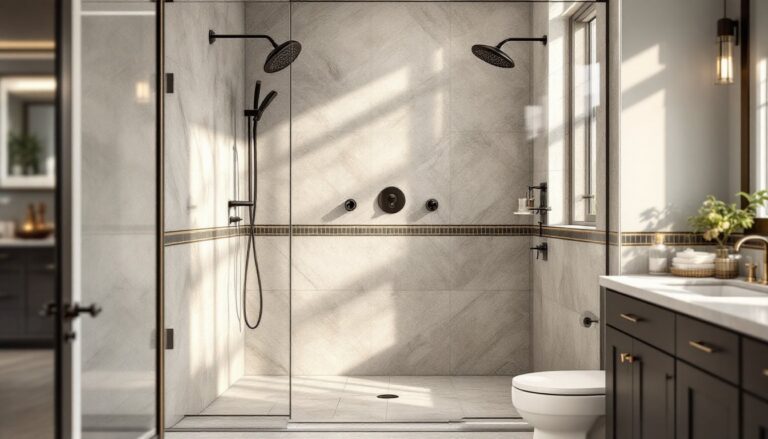
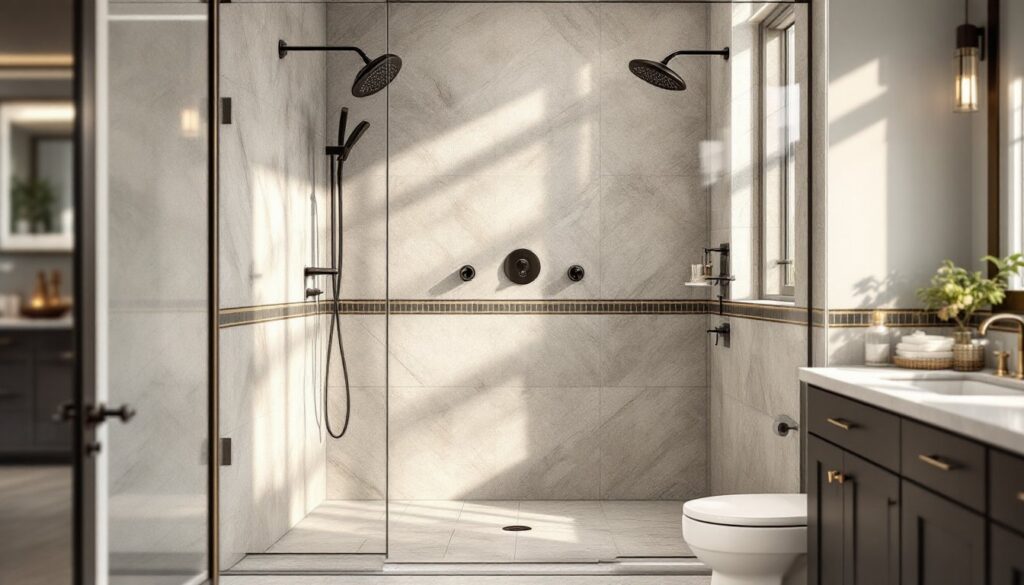
Large-format tiles (24×48-inch or 18×36-inch slabs) are the hallmark of high-end bathrooms. They reduce grout lines, creating a sleek, seamless look. Porcelain is stronger than ceramic and holds up to heavy use. Look for rectified edges (factory-cut to exact dimensions), which ensure tight joints and a modern appearance.
Handmade zellige (Moroccan tile) and Spanish cement tile offer artisanal character, each piece is unique, which adds depth but also inconsistency in fit. Expect to pay $15–$40+ per square foot. Italian marble or natural travertine in oversized formats takes luxury further, though it requires professional installation and ongoing maintenance.
Specialty finishes, textured glazes, three-dimensional tiles that cast shadows, or iridescent glazes, transform the shower into a work of art. Glass mosaic accents in metallic or iridescent finishes add sparkle without dominating. High-end materials justify higher labor costs: installation complexity increases with size and custom cuts. If you’re spending premium money on materials, hire an experienced installer, poor installation ruins expensive tile.
Budget-Friendly Alternatives That Look Premium
You don’t need to spend a fortune to achieve a luxury look. Porcelain tiles that mimic natural stone, called manufactured stone look-alikes, cost $3–$8 per square foot but look identical to the real thing. They’re non-porous, never need sealing, and are easier to maintain. Manufacturers have gotten so good that even close inspection reveals the difference only to experienced eyes.
Large-format ceramic tiles (12×24-inch) at mid-range prices ($4–$8) deliver that modern aesthetic without breaking the budget. Matte finishes over light or neutral colors hide imperfections and maintenance issues, stretching the life of your shower’s appearance. Subway tiles in unexpected colors (soft blue, warm gray, or blush) offer personality at rock-bottom cost.
Where you can save: use premium tile as a feature wall or stripe, then fill surrounding areas with basic subway or solid tiles. One wall of patterned Moroccan or textured tile can define the shower while keeping overall material costs reasonable. Grout choice also affects perceived quality, spend a few extra dollars on premium epoxy grout in matching or contrasting color: it resists staining and feels more refined than standard grout. Sites like Remodelista showcase budget and luxury bathrooms side-by-side, so you can study how designers stretch materials strategically. Labor is your second-biggest cost: a straightforward subway layout takes less time than intricate mosaics, saving you 15–25% on installation.
Conclusion
Your shower tile choice is a long-term investment in both function and feeling. Whether you go classic subway, natural stone, bold pattern, or luxury large-format, the fundamentals remain: proper waterproofing behind the tile, appropriate grout (epoxy for longevity, standard for budget), and sealing where needed. Take time to view samples in your actual bathroom lighting, live with them for a day or two, and trust your instinct. The best tile is one you’ll enjoy seeing every morning for years to come.