Table of Contents
ToggleBeige might sound boring at first glance, but modern beige bedroom design is anything but bland. It’s become the smart choice for homeowners who want a calming, timeless foundation that adapts to any decorating style. Whether you’re starting from scratch or refreshing what you have, beige offers flexibility and sophistication. The color works beautifully with natural light, pairs well with almost anything else, and creates a space where you can actually relax. In 2026, the trend isn’t about creating a stark, monochromatic bedroom, it’s about layering textures, playing with undertones, and building depth with thoughtful accents. This guide walks you through the practical steps to designing a modern beige bedroom that feels both current and timeless.
Key Takeaways
- Modern beige bedroom design uses a neutral base that promotes calmness and works as a blank canvas for flexible future updates without major renovations.
- Layer textures and undertones—mixing linen, velvet, sisal, and matte finishes—to create visual depth and prevent a modern beige bedroom from feeling flat or monotonous.
- Strategic bold accents like navy headboards, forest green artwork, or terracotta throws prevent bland spaces while maintaining the serene foundation of beige walls.
- Choose warm-white LED bulbs (2700K) and layer artificial lighting with bedside sconces positioned 36–40 inches above nightstands for both task lighting and ambiance.
- Modern furniture in beige bedrooms should prioritize clean lines, minimal ornamentation, and floating or low-profile pieces that keep the space visually open and uncluttered.
- Test multiple beige paint samples during full day-and-night cycles in your specific lighting before committing, since undertones vary dramatically and affect the final look.
Why Beige Is the Foundation for Modern Bedroom Design
Beige has earned its place in contemporary bedrooms for solid reasons. It’s a neutral base that doesn’t compete with sleep, your brain genuinely rests easier in a calm, understated environment. Unlike white, which can feel sterile, or gray, which can lean cold, beige sits comfortably in the middle with warmth built in.
From a practical standpoint, beige walls act like a blank canvas. You can swap out bedding, artwork, and accessories without repainting or major renovations. That flexibility matters when you’re updating your space over time. The color also hides dust and minor wall imperfections better than lighter neutrals, which is honestly useful in a bedroom that sees daily wear.
Modern beige isn’t monolithic either. Undertones vary dramatically, some lean warm (with yellow or red hints), others toward cool (with gray or taupe undertones). Paint samples in your specific lighting are non-negotiable before committing. Test at least two or three beige samples on your walls for a full day and night cycle to see how natural and artificial light affect them.
Color Palettes That Elevate Your Beige Bedroom
Neutral Accent Colors
Neutral accents keep things sophisticated without diluting the calm foundation. Warm whites, soft grays, and taupe create a layered, intentional look. Pair your beige walls with white bedding (linen or cotton) to establish clean lines and a modern silhouette. Then introduce soft gray throw pillows, a taupe area rug, or a charcoal accent chair to add subtle depth without visual clutter.
Cream and ivory work beautifully too, especially if your beige leans warm. These near-whites prevent the room from feeling flat while maintaining the serene atmosphere. According to design publications like Dwell, layering neutrals of varying depths is a cornerstone of contemporary interior design.
Bold Accents for Visual Interest
Beige bedrooms don’t have to be timid. Strategic bold accents prevent the space from feeling sleepy or unfinished. A deep navy blue headboard, forest green artwork, or warm terracotta throw blanket creates focal points without overwhelming the room. Keep bold accents to one or two elements, a feature wall, a statement piece of furniture, or carefully curated wall art.
Consider your existing furniture and natural light when choosing accent colors. A room flooded with warm southern light can handle cooler accent tones (navy, deep teal). North-facing rooms benefit from warmer accents (rust, warm sage, mustard). Design Milk frequently features contemporary bedrooms using this principle, beige as the anchor, with one confident accent color doing the heavy lifting.
Furniture and Layout Ideas for a Modern Beige Space
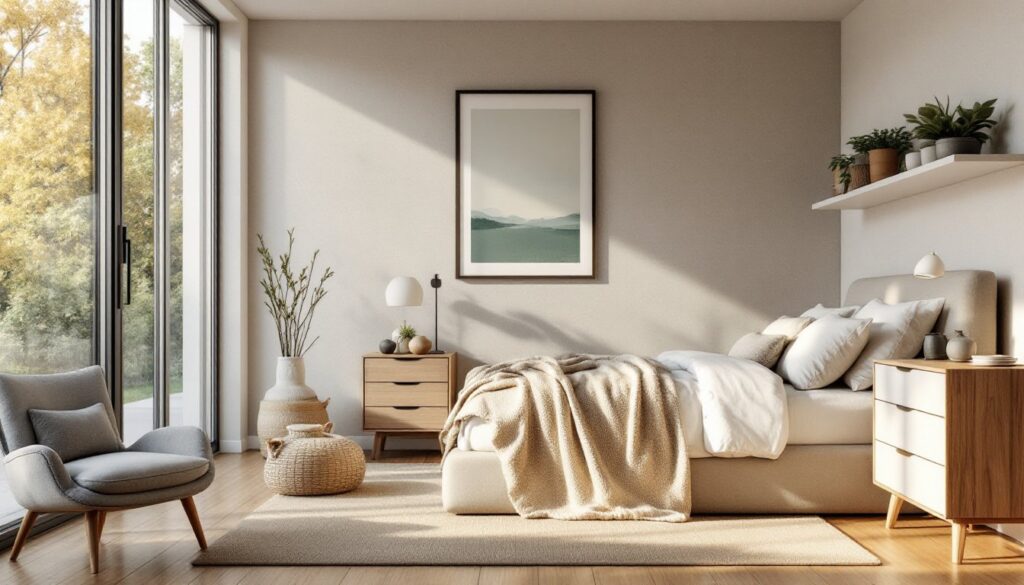
Modern furniture in a beige bedroom should prioritize clean lines and minimal ornamentation. A bed with a simple upholstered headboard (in beige, white, or a light gray) anchors the room without fussiness. Pair it with a low-profile bed frame, no decorative casters or carved details, to keep things contemporary.
Layout matters more than you might think. Position your bed perpendicular to windows when possible, so natural light doesn’t wash out the space or create awkward glare. Nightstands should be proportional to your bed: oversized nightstands make a room feel cramped, and tiny ones look skimpy. Floating nightstands (wall-mounted) are an efficient modern choice that saves floor space and keeps the room visually open.
Incorporate a low modern dresser or media console in a complementary wood tone (white oak, walnut, or natural maple work well). Avoid heavily varnished or dark wood, it can feel dated against beige walls. If space allows, add a lightweight accent chair in a neutral tone or soft color: this gives the room functionality and prevents it from feeling like a bedroom in a hotel.
Keep furniture minimal overall. Modern design thrives on breathing room. A single well-chosen accent table, a small bookshelf, or a wall-mounted shelving unit adds storage without clutter. Domino regularly showcases how uncluttered layouts make smaller bedrooms feel significantly larger.
Lighting That Highlights Beige Tones
Lighting transforms how beige reads in your bedroom. Natural light is your best ally, large windows or skylights let beige glow without any effort. If you’re constrained by limited natural light, warm-white LED bulbs (2700K color temperature) mimic sunlight and complement beige beautifully. Avoid cool-white or daylight bulbs, which can make beige look dull or grayish.
Layer your artificial lighting with purpose. A ceiling fixture provides overall illumination, but pair it with bedside sconces or lamps for task lighting and ambiance. Sconces should sit roughly 36 to 40 inches above the nightstand surface for comfortable reading without shadows. Consider dimmable lights to adjust mood throughout the evening, bright for getting ready, softer for winding down.
Skip oversized chandeliers or ornate fixtures: they fight against modern simplicity. Instead, choose minimalist pendant lights, flush-mount fixtures with clean geometry, or linear track lighting if you want flexibility. Avoid recessed lights alone, they create flat, unflattering shadows. String them across the ceiling roughly 4 to 6 feet apart for even coverage.
Textures and Layers: Adding Depth Without Color
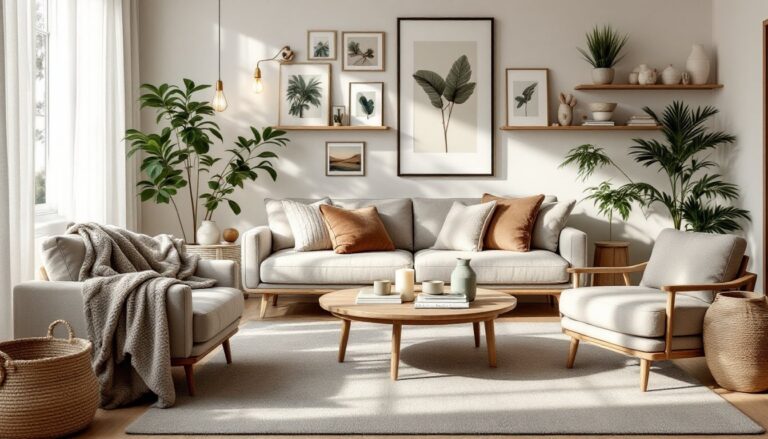
This is where a beige bedroom stops feeling boring. Texture is your secret weapon. Mix linen bedding (which has visible weave and subtle irregularity) with velvet throw pillows, a chunky knit blanket, and a sisal or jute area rug. Each material catches light differently, creating visual interest without introducing new colors.
Wall texture also counts. Textured wallpaper (grasscloth, linen-look, subtle geometric patterns), shiplap, or a soft matte paint finish add dimension that flat paint can’t match. If you’re painting, consider a matte or chalky finish instead of gloss or satin, it feels more contemporary and hides imperfections.
For guest bedroom decorating, this layering approach is especially effective because it makes spaces feel intentional and curated rather than sparse. Add a woven wall hanging, wooden floating shelves, or natural fiber baskets for organic texture. Plants introduce living texture too, a tall fiddle leaf fig, pothos, or snake plant in a simple ceramic pot softens the room’s edges.
The rule: aim for at least three different textures in your fabric and finish choices. Rough + smooth + soft = depth. Avoid matching everything (all smooth or all rough) because that flattens the look. Modern design is intentional about these contrasts.