Table of Contents
ToggleA metal pergola can anchor your backyard, create defined outdoor rooms, and add architectural interest without the rot worries that plague wood structures. Whether you’re looking to shade a patio, frame a dining area, or build a dramatic focal point, metal pergola designs offer durability, modern aesthetics, and straightforward installation compared to traditional wooden builds. Unlike their wooden counterparts, steel and aluminum pergolas resist weathering, require minimal upkeep, and work with virtually any landscape style, from contemporary minimalist yards to rustic farmhouse settings. This guide walks you through current metal pergola ideas, material choices, placement strategies, and finishing touches to help you design a structure that fits your space and lifestyle.
Key Takeaways
- Metal pergola ideas offer durability and minimal maintenance compared to wood, resisting weathering and rot while working with any landscape style from contemporary to rustic.
- Steel and aluminum are the primary materials—steel provides superior strength at lower cost but requires powder coating, while aluminum resists oxidation naturally but costs more and suits lighter-duty applications.
- Proper placement and footings are critical: position your metal pergola for optimal sun exposure, dig footings below the frost line for your region, and maintain 3–5 feet clearance from property lines and utilities.
- Annual maintenance of powder-coated metal pergolas involves gentle cleaning with mild detergent, inspecting for coating damage, and touching up scratches immediately to prevent rust spread.
- Enhance your pergola with climbing vines like clematis or kiwi for a natural canopy, string lights for evening ambiance, and layered plantings at the base to unify the structure with your landscape.
- Contemporary metal pergola designs with adjustable louver systems or clean-lined steel provide both aesthetic appeal and functional sun control without requiring permanent structural commitments.
Modern Metal Pergola Designs for Every Backyard Style
Contemporary Steel Pergolas With Clean Lines
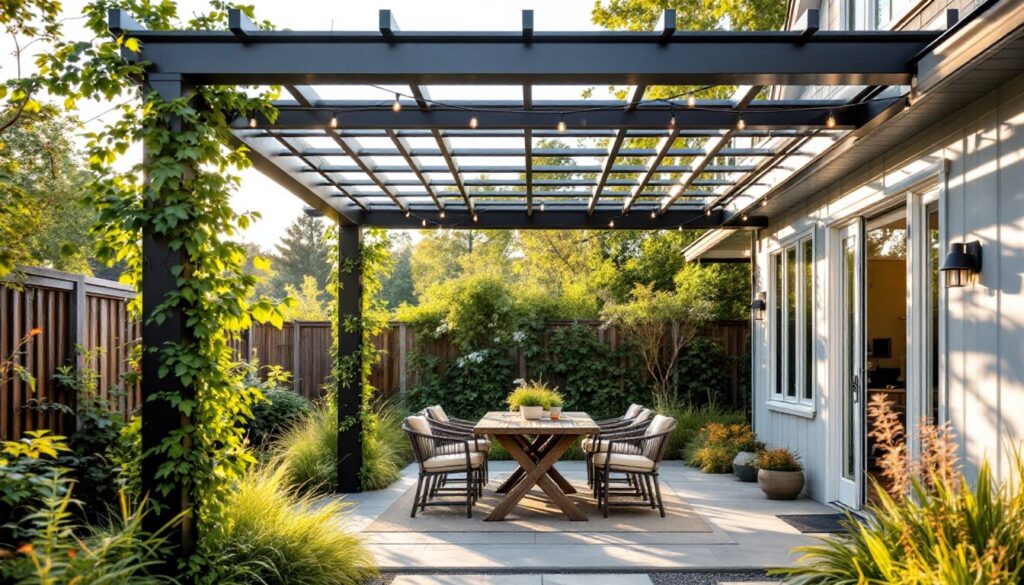
Clean-lined steel pergolas appeal to homeowners who favor minimalist or industrial aesthetics. These structures typically feature flat or slightly arched slats spaced evenly across horizontal beams, creating visual rhythm without fussy details. A classic contemporary design uses black or dark gray powder-coated steel with minimal ornamentation, just a framework that disappears into the landscape until you notice the elegant shadow play it casts at sunset.
Steam-bent or arc-top beams add subtle visual interest while maintaining the contemporary vibe. Pair them with wide spacing between slats (8 to 12 inches) for dappled shade rather than full coverage. Many modern homeowners opt for adjustable louver systems, slats that pivot to control sun exposure throughout the day. This approach combines form with function, letting you adjust shade without the permanent commitment of fixed overhead structure.
Material thickness matters here. Use schedule 40 steel tubing (1.5 to 2 inches in diameter) for spans under 12 feet: anything longer needs structural engineering. Aluminum offers a lighter visual feel but lower load capacity for hanging planters or equipment.
Black Metal Pergolas for Bold Statement Looks
Black powder-coated steel creates dramatic focal points, especially against light-colored homes or neutral hardscaping. The bold contrast reads as intentional design rather than functional afterthought. A black pergola also hides dirt and shows less water staining than lighter finishes, practical plus aesthetic win.
Mixing black metal with warm wood accents (cedar or composite railings, wood-slat infill panels) softens the industrial edge and bridges traditional and modern styles. Alternatively, pair black metal with climbing vines like clematis, jasmine, or kiwi, the deep background makes foliage pop and creates a lush, almost mystical retreat.
For bold impact, consider asymmetrical designs: different slat spacing, angled or geometric cut-outs in beams, or one open side that frames a specific view. According to hardscaping design guides, these design twists transform a simple shade structure into a sculptural garden element. Pair with integrated lighting, string lights or recessed LED strips mounted to beams, to extend usability into evening hours and emphasize the structure’s geometry.
Metal Pergola Materials and Durability Considerations
Steel vs. Aluminum is the foundational material choice. Steel offers superior strength-to-weight ratio and costs less, but it rusts without proper finishing. Aluminum resists oxidation naturally, costs more, and works best for lighter-duty applications (smaller spans, no heavy hanging loads). Both must be powder-coated or painted for longevity: bare metal exposed to moisture will corrode within months, not years.
Thickness and gauge matter for both materials. A 1.5-inch diameter steel tube handles most residential spans: smaller tubes (1-inch or less) flex noticeably in wind or under load. Aluminum needs slightly heavier gauges due to lower stiffness. Check local building codes, many jurisdictions require engineering stamps for structures over 10 feet tall or in wind zones above 90 mph.
Weathering and maintenance tips for long-lasting appeal
Powder coating is your first line of defense. Factory-applied polyester or polyurethane powder finishes last 10+ years in moderate climates and 5–7 years in coastal or harsh environments. Inspect your pergola annually for chips or scratches where bare metal shows. Touch up exposed metal within weeks of damage, rust spreads quickly once it starts.
Brushing or power-washing annually removes pollen, bird droppings, and salt spray. Use mild detergent and soft brush bristles: pressure over 1,500 PSI can damage powder coating. Avoid wire brushes or abrasive pads.
In coastal regions or high-humidity areas, consider Corten steel (weathering steel) or marine-grade aluminum instead of standard finishes. Both cost 20–40% more but develop a stable patina that actually protects underlying metal. Corten develops a rusty appearance intentionally: it’s not corrosion but a protective layer. If that look doesn’t match your design, stick with powder coating and maintenance.
For fasteners and hardware, use stainless steel bolts, brackets, and tie-downs. Galvanized hardware will rust and stain the beam underneath. Caulk or seal all joints where water pools: standing water accelerates corrosion.
Metal Pergola Placement and Layout Planning
Orientation shapes function. Position your pergola to provide afternoon shade if your main use is a summer dining or lounge area, that’s typically a southwest or west-facing slope. If you want dappled morning light over a workspace or reading nook, orient it east or northeast. In hot climates, south-facing placement with adjustable louvers gives maximum flexibility.
Clearance matters. Position pergolas at least 3 feet away from roof lines, gutters, and overhead utilities. Check local setback requirements, most jurisdictions require 3–5 feet from property lines, though residential structures sometimes have exemptions. Call 811 (or your local locate service) before digging footings to mark underground utilities.
Footing depth depends on frost lines in your region. In colder climates (zones 5–7), dig below the frost line, typically 36–48 inches deep. Southern climates may allow 24–30 inches. Frost heave pushes shallow footings out of the ground during freeze-thaw cycles, ruining alignment. Use concrete footings rated for your frost depth, not soil alone, settling and shifting will happen over time.
Post spacing and beam sizing should follow structural guidelines. A typical residential pergola uses 4×4 or 6×6 posts spaced 8–12 feet apart, supporting beams that span the opening. Wider spans (over 12 feet) need mid-span bracing or larger beams. Wind load also increases span limits: verify with local building codes if you’re in a windy region.
Draw a site plan to scale showing the pergola footprint, post locations, utilities, sight lines from the house, and nearby trees or structures. This prevents frustration later when you discover a post sits directly under a downspout or a corner catches harsh afternoon sun you weren’t expecting.
Enhancing Your Metal Pergola With Greenery and Accessories
Climbing vines transform a bare metal frame into a living canopy. Fast-growing options include clematis, jasmine, kiwi vine, and hops, most reach 15–20 feet and are forgiving for first-time growers. Slower but lush alternatives like English ivy or climbing hydrangea create permanent structure after 3–5 years of establishment. Plant vines at the base of posts with a small trellis or netting guide: they’ll follow it upward onto the pergola beams.
Woody perennials like grapes work too, especially in wine country regions. They’re heavy once mature, so ensure your pergola beams are oversized (2-inch diameter or larger steel) to handle the weight. According to outdoor entertaining guides, grapevines also provide seasonal interest, bare branches in winter let light through, then dense canopy in summer blocks sun and creates a cozy retreat.
String lights and LED strips amplify ambiance. Warm white (2700K) string lights feel inviting for evening gatherings: cool white (4000K+) suits workspace areas. Mount them along the underside of beams or crisscross in diagonal patterns. Battery-powered string lights avoid trenching for buried wire, though they need seasonal battery replacement. Hardwired LEDs mounted in recessed fixtures look cleaner but require electrician installation and a dedicated circuit.
Sturdy outdoor furniture, weather-resistant patio sets, lounge chairs, or a dining table, anchors the space functionally and visually. Textiles like outdoor rugs and cushions add warmth without weight. A misting system overhead (separate from pergola structure) brings practical cooling on scorching days. Side panels, outdoor curtains, or removable shade cloth hung from eyelets offer flexible privacy and wind breaks.
Planting beds around the pergola base soften the structure and unify it with the landscape. Low-growing perennials, ornamental grasses, or flowering shrubs create layering without blocking sightlines. Gravel or mulch pathways leading to the pergola make the approach intentional and draw traffic naturally. Rustic garden design principles emphasize this blend of hardscape and softscape, the structure supports life rather than dominating it.