Table of Contents
ToggleMid-century modern (MCM) design has become a go-to choice for homeowners who want style that lasts. Unlike trends that fade in a season, MCM bedroom ideas focus on clean lines, functional beauty, and pieces that actually age well. Whether you’re refreshing a single wall or overhauling an entire room, MCM design gives you permission to blend form and function without apology. The best part? You don’t need a huge budget or professional designer to pull it off. This guide walks through the practical steps and specific choices that make an MCM bedroom feel both sanctuary-like and unmistakably modern.
Key Takeaways
- MCM bedroom ideas prioritize clean lines, functional beauty, and honest materials like teak, walnut, and oak that resist passing trends.
- A platform bed with tapered legs and a simple headboard serves as the anchor piece in mid-century modern design, keeping proportions balanced and the room feeling spacious.
- MCM bedrooms use intentional, narrow color palettes with warm wood tones and muted neutrals, reserving bold colors like mustard or teal as accents rather than wall colors.
- Layer lighting with table lamps, wall-mounted reading lights, and dimmable fixtures instead of relying on overhead lights to create a warm, sanctuary-like atmosphere.
- Textiles, wall art, and accessories should follow the rule of restraint—fewer, better pieces like quality quilted blankets, solid-tone rugs, and one or two framed prints keep the space breathable.
- Invest in quality wood furniture with solid joinery and smooth-gliding drawers rather than reproductions, as MCM embraces material integrity and eschews plastic-looking veneer.
What Makes MCM Bedroom Design Timeless
MCM design emerged in the post-World War II era, emphasizing honest materials, minimal ornamentation, and proportions that just work. In a bedroom, this translates to furniture that serves a clear purpose without fussy details, walls that breathe, and a sense of calm rather than clutter.
The core MCM philosophy rests on three pillars: proportion, material integrity, and functionality. A well-designed MCM bedroom respects human scale, pieces fit the room, not the ego. Wood grain and natural finishes matter because they’re real, not because they’re trendy. And function drives form: a nightstand holds your lamp and book, period.
What keeps MCM timeless is its resistance to decoration overload. A room decorated this way won’t scream “I was done in 2020” because there’s nothing dated about a beautiful line, honest materials, or thoughtful spacing. Consider how museums still display 1950s and 1960s furniture as art: that durability is your guide.
Essential Furniture Pieces for Your MCM Bedroom
Building an MCM bedroom starts with anchor pieces that set the tone. You’re not hunting for reproductions or mass-market imitations, you’re looking for pieces with structure, proportion, and honest materials.
Wood species matter more in MCM than in some other styles. Teak, walnut, and oak were workhorses of the era because they’re durable and beautiful. When shopping secondhand or new, check wood grain, joinery, and whether hardware feels solid. Avoid anything with thin veneer or plastic-looking details: MCM embraces the material, it doesn’t hide behind it.
Platform Beds and Headboards
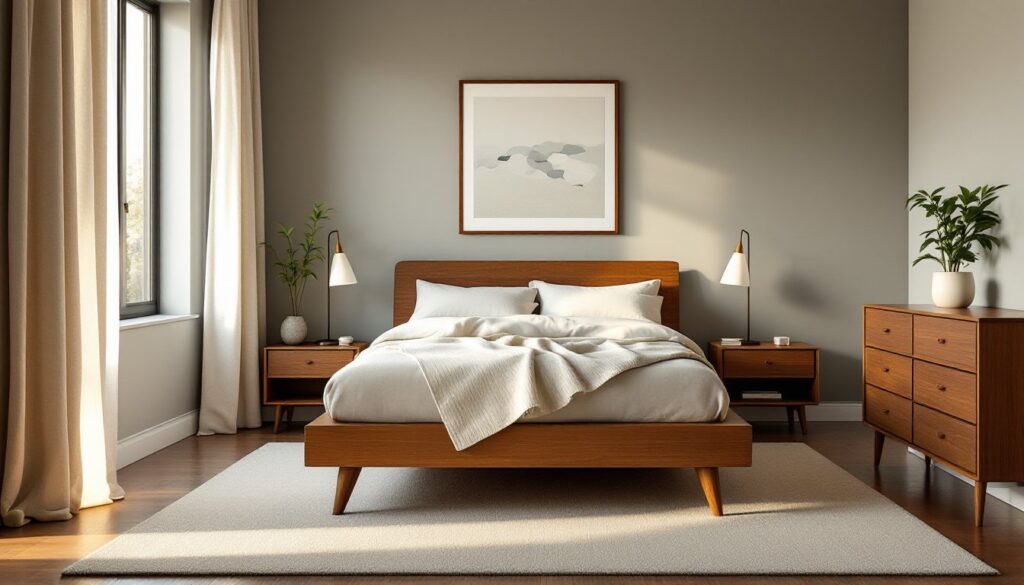
A platform bed is the MCM bedroom’s anchor. Unlike box springs and frames, a platform is a single, solid structure that sits low to the ground, emphasizing horizontal lines. Look for a bed with clean edges and minimal footprint, tapered legs (usually splayed outward slightly) are classic MCM. A 6- to 8-inch platform height is standard: this keeps proportions right and makes the room feel larger.
Headboards deserve attention. A simple wood headboard, whether floating or attached, works beautifully. Mid-century headboards often feature a single solid panel or slats spaced evenly. Some include integrated shelving or a small console at the top, which adds function without bulk. If budget is tight, even a well-painted plywood headboard finished smooth can read as MCM if the proportions are right.
Mattress choice won’t shout MCM aesthetics, but it matters for comfort. A 10- to 12-inch-tall mattress sits proportionally on a platform bed without overwhelming it. Avoid oversized pillow piles: MCM bedrooms keep sleeping areas streamlined.
Dressers and Nightstands
Dressers are the workhorse of any bedroom, and MCM offers clear direction. Hunt for pieces with clean, rectangular silhouettes, often slightly wider than they are tall. Drawers should glide smoothly and hardware should feel intentional, not decorative. Look for solid wood construction or quality plywood with real wood veneer: check that drawers are joined with dovetails or box joints, not staples.
Nightstands follow the same logic: functional, proportional, honest. A single drawer and an open shelf below work beautifully. Leg height is crucial, 4 to 6 inches of clearance under a nightstand makes cleaning easier and feels lighter visually. Avoid bulky night tables with multiple drawers if your bedroom is compact: a slim, single-drawer stand keeps the room breathable.
Material-wise, pair wood pieces thoughtfully. Matching wood species across bed, dresser, and nightstands creates cohesion without looking like a set from a furniture store. If mixing species, keep them in the same tone family (all warm, or all cool) so the room feels intentional, not accidental.
Color Palettes and Wall Treatments
MCM bedrooms typically stick to a narrow, intentional palette. This isn’t about beige-ness: it’s about letting materials and line take the lead while color supports mood.
The classic MCM palette pairs warm wood tones with muted neutrals: soft whites, warm grays, gentle greiges, and soft taupe. If you want color, think warm oranges, muted mustard, sage green, or deep teal, but use these as accents, not wall color. A single accent wall in a thoughtful color can anchor the room without making it feel small.
Wall prep matters enormously. If your walls aren’t smooth and even, no paint color will look MCM. Fill gaps, sand rough spots, and use a quality primer before painting. A satin or eggshell finish reflects light subtly and feels more refined than flat paint: semi-gloss or gloss looks wrong in MCM spaces because it’s too shiny.
Wood paneling or shiplap can work if executed with restraint. Avoid trendy whitewashed finishes: instead, embrace natural wood or paint it a soft, warm tone. If adding wood to a single wall, keep line spacing consistent and proportional, typically 4 to 6 inches wide, spaced evenly. Panels should sit flush and level: crooked paneling reads as amateur, not charming.
For a textured approach, consider grasscloth or linen-look wallpaper on one wall behind the bed. These materials feel tactile and MCM-authentic without the labor of paneling. Quality matters: cheap grasscloth peels and wrinkles. Modern design inspiration can show how contemporary interiors use texture and restraint effectively.
Simple wall art, a single large piece or a sparse arrangement, complements MCM color thinking. Avoid gallery walls: clean, negative space is part of the aesthetic.
Lighting That Sets the Mood
Lighting transforms an MCM bedroom from a space with furniture into an intentional sanctuary. MCM embraced function-driven design, so lighting pieces should be sculptural and useful, never purely decorative.
Overhead fixtures in MCM bedrooms are often minimal or absent. Instead, layer your lighting with nightstands lamps, wall-mounted reading lights, and possibly a pendant or chandelier. A pair of matching table lamps flanking the bed, with simple tapered bases and linen or paper shades, grounds the sleeping area without glare. Look for lamps with 60- to 75-watt bulbs equivalent for gentle ambient light.
Bedside reading requires targeted light. A swing-arm wall lamp or a slim floor lamp beside the bed works better than a table lamp if space is tight. Warm white bulbs (2700K color temperature) feel more restful than cool whites. Avoid LED bulbs with harsh blue tones: they work against the MCM vibe of warmth and calm.
Pendants above or beside the bed can work if they’re proportional and simple. A single pendant with a paper or fabric shade, suspended at 18 to 24 inches above the nightstand, provides both light and visual interest. Avoid anything with excessive pattern or crystal details.
Dimmable bulbs and fixtures give you flexibility: MCM isn’t about one mood, but about controlling light to suit the moment. Install dimmer switches if your budget allows, even a simple hardware-store dimmer costs under $20 and changes how the room feels throughout the day.
An interior design resource can show examples of how lighting shapes modern bedroom atmospheres.
Final Touches: Accessories and Textiles
Accessories make or break an MCM bedroom. The rule is restraint: fewer, better pieces rather than a lot of small items crowding shelves and surfaces.
Textiles are your secret weapon for softness and texture. A quality quilted cotton throw blanket in a complementary neutral or your accent color adds warmth to the platform bed. Area rugs define the sleeping zone and introduce texture, look for wool or wool-blend rugs in solid tones or subtle geometric patterns. A rug 5 by 8 feet or 6 by 9 feet works well under most platform beds, with about 18 inches of rug showing on each side.
Curtains should be simple and functional. Floor-to-ceiling lined panels in a neutral linen or cotton blend filter light and feel substantial without looking heavy. Avoid sheer, ruffly, or patterned curtains: MCM embraces weight and honesty. Hang rods at 12 inches above the window trim so panels frame the window without fussiness.
Decorative objects should earn their place. One or two small wood sculptures, a simple ceramic vase, or a brass bookend can sit on a dresser or nightstand without clutter. Avoid tchotchkes, frames cluttering every surface, or artificial plants. Real plants work beautifully in MCM spaces if kept minimal, a tall pothos in a simple ceramic pot or a snake plant in a corner adds life without decoration.
Wall art keeps it simple: a single large abstract print, a black-and-white photograph, or a framed mid-century poster. Avoid overstuffed gallery walls: one or two pieces per wall is the MCM way. Frame them in simple wood or metal, and keep spacing intentional.
For guest bedroom decorating ideas that blend MCM with hospitality, apply these same principles, add a soft throw and ensure bedside lighting is welcoming and functional. Your guests will notice the thoughtfulness.
Look at resources like MCM master bedroom collections to see how restraint and proportion work in real spaces. The rooms that endure aren’t busy: they’re breathable.