Table of Contents
ToggleA paver patio is one of the most impactful backyard upgrades a homeowner can tackle. Unlike a simple concrete slab, pavers offer flexibility in design, material choice, and layout, giving you a customized outdoor space that reflects your style and withstands years of weather and foot traffic. Whether you’re hosting weekend barbecues, creating a tranquil retreat, or building an entertainment hub, paver ideas range from timeless classics to bold contemporary designs. This guide walks you through 25 compelling patio paver concepts, material options, and installation considerations to help you choose a design that fits your space, budget, and skill level.
Key Takeaways
- Paver ideas for patio design range from classic brick and herringbone patterns to modern geometric layouts, each offering different visual impacts and structural benefits.
- Material choice directly affects durability and maintenance: concrete pavers are affordable and freeze-thaw resistant, while natural stone offers elegance but requires regular sealing and professional installation.
- Herringbone and chevron patterns provide excellent structural support and visual appeal but require 15–20% extra material for waste and 30–40% longer installation time than simpler layouts.
- Permeable pavers address drainage and environmental concerns, cost 10–30% more upfront, and are ideal for areas with heavy rainfall or strict stormwater regulations.
- Color strategy—from monochromatic palettes to border-and-field approaches with accent pavers—should complement your home’s exterior and existing hardscape for cohesive curb appeal.
- Order 10–15% extra paver material to account for breakage and waste, and verify that your chosen paver is rated for your climate zone, especially for freeze-thaw durability in cold regions.
Classic Brick Paver Designs
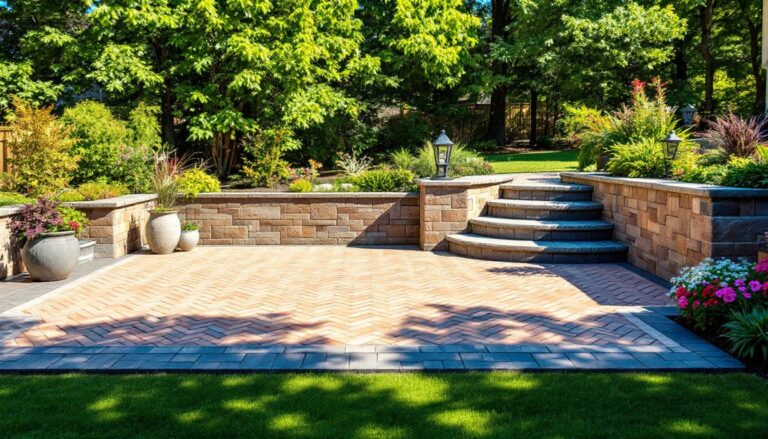
Brick pavers are the tried-and-true choice for a reason. Their warm, earthy tones and time-tested durability make them a cornerstone of patio design. A traditional running bond pattern, where each brick overlaps the center of the brick below it, creates visual movement while maintaining structural integrity. This layout distributes weight evenly and is forgiving for first-time installers.
Another enduring option is the stack bond pattern, where bricks align in a grid. It’s simpler to lay and more formal, though it requires better base compaction since the pattern doesn’t distribute load across as many joints. Standard clay brick pavers measure roughly 3.625″ × 7.625″ × 2.25″ (nominal sizes: actual dimensions run slightly smaller due to grout joints).
For a rustic feel, consider tumbled or hand-molded bricks, which have worn, irregular edges. These add character but cost 20–40% more than standard pavers and can be trickier to level during installation. Brick holds heat, so it won’t feel scorching on bare feet in summer, a genuine comfort advantage over stone. According to design trends showcased in professional patio upgrades, classic brick remains a top choice for mixing traditional aesthetics with lasting performance.
Modern Geometric Patterns
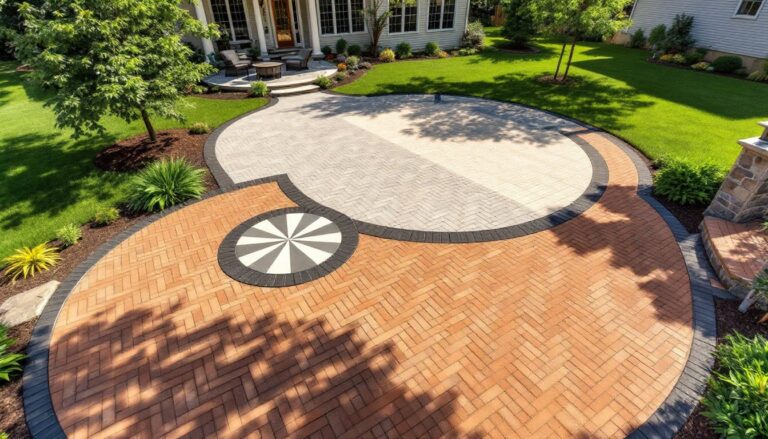
If classic layouts feel too safe, geometric patterns bring contemporary edge to your patio. Mixing brick and concrete pavers in contrasting colors, charcoal with cream, for instance, creates bold visual lines. Consider a pinwheel layout, where four pavers meet at a central point in a rotating pattern. It’s eye-catching but demands precision cutting and more waste material.
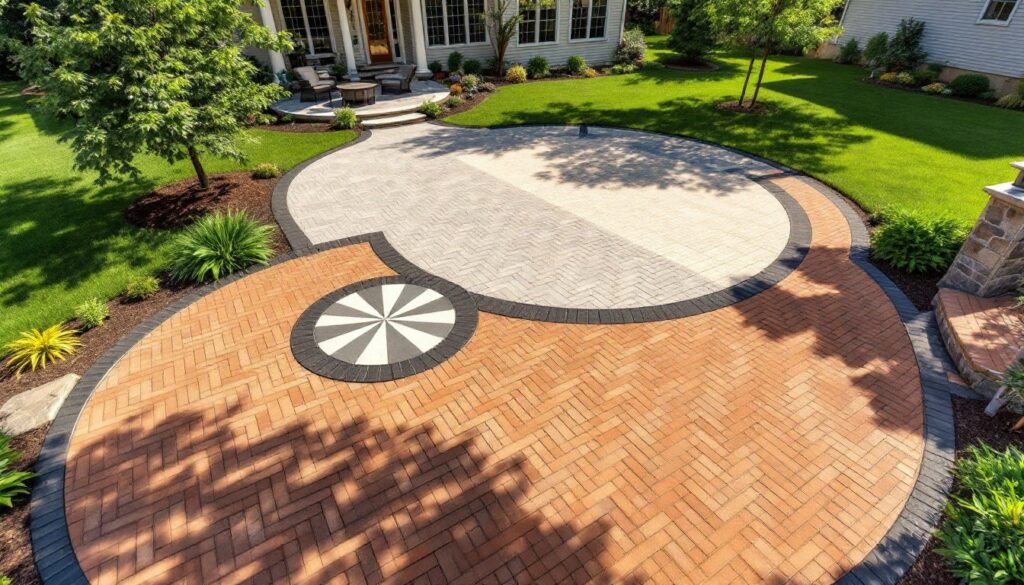
A sunburst or radial design fans pavers out from a central focal point, drawing the eye inward like a compass rose. It works beautifully around a fire pit or seating area but requires a solid plan and possibly professional help for cuts and layout.
Herringbone and Chevron Layouts
Herringbone and chevron patterns are modern darlings for a reason: they’re visually dynamic, and the overlapping layout provides excellent structural support. In a herringbone, pavers alternate 45 degrees, brick-by-brick, creating a zigzag. In a chevron, pavers angle in the same direction, creating a V-shape that repeats.
Both patterns require more cutting at edges and corners: a wet saw or circular saw with a diamond blade is essential. Budget 15–20% extra material for waste. Herringbone is slightly more forgiving for DIYers because the pattern naturally accommodates minor alignment shifts. Chevron looks sharper but demands tighter tolerances. The time investment is real, expect a 30–40% longer installation than a simple running bond, even with experience.
Natural Stone and Permeable Options
Flagstone, bluestone, and slate offer a high-end, organic aesthetic that complements landscape architecture beautifully. These natural stones vary in thickness (typically 0.5″ to 1.5″) and are laid in an irregular, random pattern or ashlar (rectangular, stacked). The downside: they’re labor-intensive to install, pricier than brick (often 2–3× the cost), and require sealing every 2–3 years to resist staining and weathering.
Permeable pavers address drainage and environmental concerns. They have gaps filled with sand or gravel, allowing water to drain through rather than pooling or running off into storm sewers. Some are recycled plastic, others are permeable concrete with open cells. They’re ideal if you’re in an area with heavy rainfall or strict stormwater regulations. Installation is similar to standard pavers but requires precise grading and a permeable base (crushed stone, not compacted clay).
Permeable options cost 10–30% more upfront but reduce drainage headaches and appeal to eco-conscious homeowners. Check local building codes: some municipalities require or incentivize permeable surfaces. Composite permeable pavers (plastic and rubber) are durable and lightweight but can look artificial up close, view samples before committing.
Color Combinations and Accent Ideas
Color is where personality shines. A monochromatic palette (all one color or shade) feels clean and spacious, ideal for small patios. Warm tones, terracotta, buff, honey, create an inviting, Mediterranean vibe. Cool grays and blue-blacks feel contemporary and hide dirt well.
For contrast, try a border and field approach: lay a single-row frame in one color around the perimeter, then fill the center with a second color or pattern. This adds visual definition without overwhelming the space. A 50/50 mix of two complementary shades, laid randomly, creates subtle texture while unifying the design. Avoid equal parts of three or more colors, it can read as chaotic.
Accent pavers in a bright or metallic finish draw the eye to features like a pathway entrance, fire pit surround, or built-in seating. Dark pavers (charcoal, black) absorb heat and can feel sweltering: use them sparingly in hot climates or pair them with lighter pavers to break up thermal mass. Light colors reflect heat and are practical in southern exposures, though they show dirt and stains more readily. When mixed thoughtfully, colors should relate to your home’s exterior and existing hardscape (driveway, walkway, fence) for cohesive curb appeal.
Choosing the Right Paver Material for Your Space
Material choice hinges on climate, foot traffic, budget, and maintenance tolerance. Concrete pavers are affordable ($2–5 per paver) and come in countless colors and finishes. They’re durable, freeze-thaw resistant, and widely available. Downsides include potential cracking in extreme temperature swings and a somewhat utilitarian look (though high-end stamped or permeable versions blur that line).
Clay brick costs $4–8 per paver and offers warmth and classic appeal. It’s softer than concrete, so it may chip or settle unevenly under heavy loads: it’s less ideal for vehicle traffic. It’s also more porous, so it stains more easily and needs sealing.
Natural stone (slate, flagstone, bluestone) runs $8–20+ per paver and provides unmatched elegance but demands more expertise during installation and regular maintenance. It can be slippery when wet, so consider a non-slip finish or textured surface if safety is a concern.
Permeable pavers range widely ($3–15 per paver depending on material) and are best for areas prioritizing drainage or meeting code requirements. Before buying, pull a sample paver and place it next to your house siding, trim, or existing hardscape. The photo in a catalog rarely matches natural daylight. Order 10–15% extra material: breakage and waste are inevitable. Cost varies regionally: use home project cost estimators to get local pricing and contractor quotes. Finally, verify that the paver you choose is rated for your climate zone, freeze-thaw durability ratings matter in cold regions.
Conclusion
Your paver patio is an investment that blends aesthetics, function, and durability. Start by assessing your climate, foot traffic patterns, and design preference, whether that’s classic brick, modern geometry, or eco-conscious permeable stone. Prep work, material selection, and honest appraisal of your skill level make the difference between a project you’re proud of and one that disappoints. If you’re unsure about layout or structural considerations, a consultation with a landscape designer or experienced contractor is money well spent.