Table of Contents
ToggleA well-designed paver stone patio transforms how you use your backyard. Whether you’re hosting weekend gatherings, creating a quiet retreat, or simply adding property value, the right patio design matters. Paver patios offer flexibility, you can mix materials, play with patterns, adjust elevation, and experiment with color in ways that concrete slabs or natural stone just can’t match. This guide walks you through 12 practical, proven paver stone patio ideas, from timeless herringbone layouts to modern geometric designs, so you can plan a space that fits both your lifestyle and your landscape. Let’s dig in.
Key Takeaways
- Paver stone patio designs offer superior flexibility compared to concrete or natural stone, allowing you to mix materials, experiment with patterns, colors, and elevations to create a personalized outdoor space.
- The herringbone pattern is structurally sound and visually striking for rectangular pavers, requiring careful planning of starting edges and consistent 3/16″ joint spacing to maintain alignment throughout your layout.
- Modern geometric layouts—including stacked bond, running bond, and mixed-size tile combinations—create sophisticated, intentional designs that work especially well for contemporary or minimalist home architecture.
- Multi-level paver patios with tiered sections, steps, and raised edges add depth, functionality, and visual interest by segmenting your backyard into distinct zones for dining, seating, and entertainment.
- Material selection should balance aesthetics with durability and climate: porcelain pavers suit freeze-thaw regions and high-traffic areas, while natural stone offers premium appearance but requires periodic sealing and slip-risk consideration.
- Color choice and finish texture directly impact maintenance and safety—warm tones hide staining better in traditional settings, while tumbled or brushed finishes provide superior grip resistance compared to polished surfaces.
Classic Herringbone Pattern Design
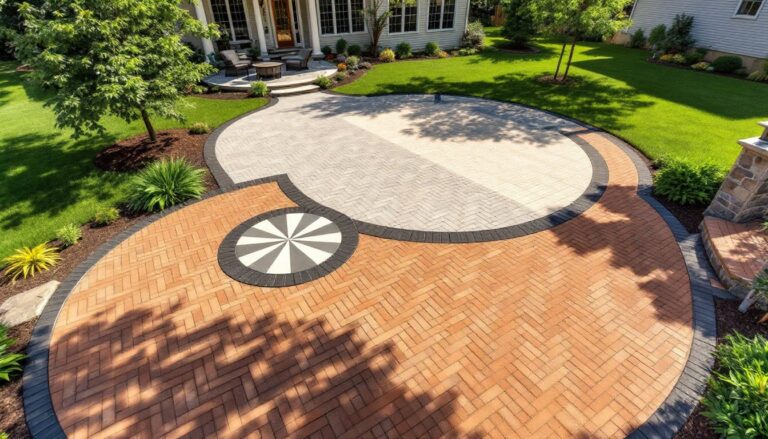
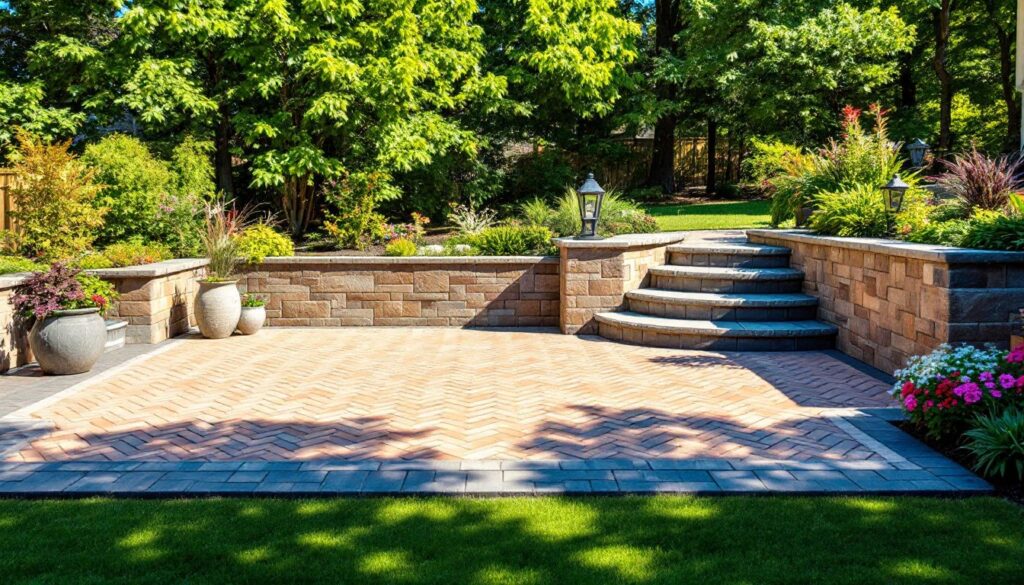
The herringbone pattern is the workhorse of paver design. Rectangular pavers lay out at 45-degree alternating angles, creating a V-shaped weave that’s both visually striking and structurally sound. The interlocking geometry naturally distributes foot traffic and resists shifting, important when you’re walking on the surface daily.
Herringbone works best with rectangular pavers, typically 2″ × 4″ or 3″ × 6″ in size. Standard paver thicknesses run 1⅜” to 2⅜” (nominal vs. actual measurements vary by manufacturer, so check specs). Laying herringbone requires patience but no special tools beyond a wet saw for cutting edge pavers to fit. You’ll need to account for about 5–10% waste when ordering, depending on your site’s boundaries and cut complexity.
Color choice shapes the entire feel. Warm red or tan tones suit traditional landscapes, while charcoal or slate gray reads more contemporary. Many homeowners combine two complementary colors, alternating rows of light and dark pavers, to emphasize the pattern rhythm. This approach also hides dust and minor staining better than single-color designs. Plan your layout carefully: herringbone requires clean starting edges and consistent spacing (typically 3⁄16″ for joint width) to prevent the pattern from looking crooked halfway through.
Modern Geometric Layouts for Contemporary Spaces
If your home’s architecture leans minimal or industrial, geometric paver layouts cut the noise and emphasize clean lines. Stacked bond (one paver stacked directly above another), running bond (offset rows), and mixed-shape combinations all register as intentional and sophisticated.
Stacked bond is the simplest: square or rectangular pavers line up in a grid. It’s fast to lay, forgiving on cuts, and shows material quality front-and-center since there’s no pattern to hide minor imperfections. Running bond staggers pavers so each unit overlaps the one below by half, this strengthens the assembly and creates subtle visual movement without being loud.
Mixed-Size Tile Combinations
Mixing paver sizes within a geometric framework is trending in 2026. A popular approach pairs 12″ × 12″ squares with **12″ × 24″” rectangles in a ratio of roughly 30% small to 70% large. Arrange them in a planned, asymmetrical grid so the eye reads intention, not accident. This layout works especially well for permeable pavers or permeable pavers blended with standard pavers to manage runoff while maintaining aesthetics.
Color becomes texture in geometric designs. Monochrome (one color, varied tones) creates a modern look: the subtle shifts in shading add depth without pattern busyness. Alternatively, a two-tone or three-color scheme, say, light gray, charcoal, and cream, can frame zones or create visual breaks in larger patios. Geometric layouts often benefit from a perimeter border in a contrasting color, which defines the space and anchors the design. This border paver is typically slightly different in size or finish, creating a frame effect.
Rustic Stone and Natural Material Blends
Blending cut stone pavers with natural slate, flagstone, or even recycled brick brings warmth and organic character to a patio. This approach works beautifully in cottage, farmhouse, or transitional landscapes. The irregular shapes and varied tones create a hand-laid, lived-in aesthetic that new uniform pavers can’t replicate.
When mixing material types, account for thickness differences. Standard concrete pavers are 2⅜” thick, while slate or flagstone can range from 1″ to 2″. You’ll need to adjust the sand base or use a leveling compound so all surfaces finish flush. Failure to level mismatched materials creates tripping hazards and puddles that pool unevenly.
Rustic blends hide dirt and staining naturally. Weathered colors, ochre, rust, warm gray, mottled brown, disguise mud splatter and seasonal leaf debris better than pristine finishes. Many homeowners let the grout and joint gaps be slightly wider (up to ¼”) in rustic designs, emphasizing the irregular, less-polished look. Polymeric sand or traditional sand works equally well: polymeric offers superior weed resistance, though some designers prefer traditional sand for rusticity.
When sourcing materials, verify compatibility. Eight creative ways to use pavers include combining salvaged brick with new concrete pavers, a cost-effective way to achieve mixed-material charm while reducing waste. Local reclamation yards often stock salvaged stone: inspect for structural soundness and verify that old brick or stone meets contemporary grip and durability standards.
Multi-Level Paver Patios With Dimension
A single flat patio can feel monotonous. Multi-level designs, using retaining walls, step risers, or subtle grade changes, add depth, interest, and usable zones within your backyard.
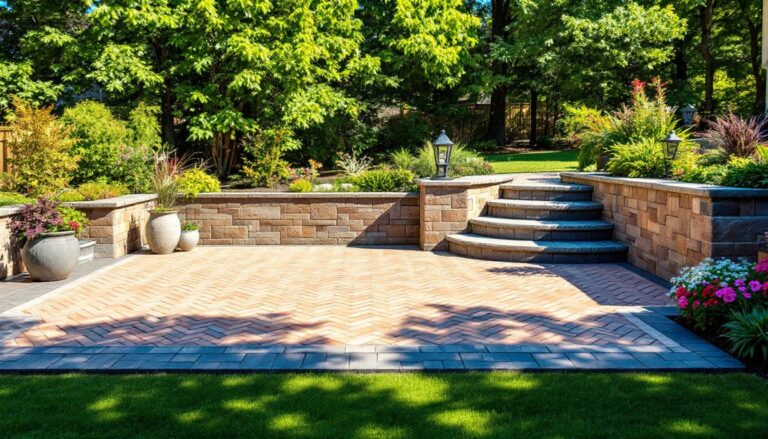
A tiered layout might feature a main dining patio at grade level, a sunken seating area (4–6 inches below), and a raised planter or lounge deck (8–12 inches above grade). Each level is a separate paver assembly laid to its own finished height, then connected by steps or ramps. This approach segments your backyard functionally, cooking and dining on one level, conversation or fire pit seating on another, while creating natural sightlines and wind breaks.
Adding Steps and Raised Edges
Steps require careful planning. Standard residential step riser height is 6–7 inches, with a tread depth of 12–15 inches (the part your foot lands on). Risers shorter than 6 inches or deeper than 18 inches feel awkward and increase stumble risk. For a multi-level patio, consider a wide landing (at least 4 feet × 4 feet) at the top and bottom of any step run to prevent people from immediately entering or exiting into tight spaces.
Raised edges serve both aesthetic and functional purposes. A 4-inch paver border or a landscape timber edge contains the patio zone visually and prevents soil from creeping onto the paved surface. Timber edges require periodic maintenance, rot and insect damage degrade untreated wood within 3–5 years in wet climates. Paver borders or aluminum edging outlast timber with minimal upkeep. Home design platforms like Houzz showcase countless multi-level patio examples: browsing real projects helps refine your vision before you commit.
Color Schemes and Material Selection Tips
Color makes or breaks a patio design. Your patio is likely the largest exterior surface you’ll see daily, so its tone sets your home’s outdoor mood.
Warm tones (terracotta, tan, rust, warm gray) feel welcoming and complement traditional, cottage, or farmhouse architecture. They also show less dust and minor staining. Cool tones (slate gray, charcoal, blue-gray, cool concrete) pair well with modern or mid-century homes and feel sophisticated: they show footprints and spills more readily, so maintenance matters. Neutral tones (cream, light gray, soft beige) brighten small spaces and provide a calm backdrop for plantings.
Consider your region’s sunlight. In hot climates, light-colored pavers stay cooler to the touch, a real comfort if you’re barefoot. Darker pavers absorb heat: in scorching climates, they can be uncomfortable during peak afternoon sun. Look at existing hardscaping (driveway, roofline, siding color) and aim for either a subtle complement or deliberate contrast, not a chaotic mix.
Material durability matters more than aesthetics alone. Porcelain pavers are non-porous, stain-resistant, and ideal for high-traffic zones or freeze-thaw climates: they’re pricier but require less sealing. Concrete pavers offer good durability at lower cost and accept color/texture variation for visual interest. Natural stone (slate, granite, limestone) looks premium but can be slippery when wet and requires periodic sealing. Budget and climate should drive your choice, not just looks.
Finish texture affects both safety and maintenance. Smooth, polished pavers look sleek but can be slippery, especially when wet or icy. Tumbled, honed, or brushed finishes provide better grip and hide scratches. For patios where slip resistance is critical, near a pool, in wet regions, or on slopes, prioritize texture over polish.