Table of Contents
ToggleA fireplace in the master bedroom transforms it from a functional sleeping space into a personal sanctuary, a retreat where you can unwind after a long day. Whether you’re drawn to clean lines and minimalist aesthetics, weathered stone and timber, or the convenience of electric heating, a well-designed fireplace becomes both a focal point and a practical heat source. The right fireplace style can define your bedroom’s entire ambiance, and the good news is that options exist for nearly every budget, skill level, and aesthetic preference. This guide walks through eight design approaches that work for master bedrooms, along with installation considerations and styling strategies to help you choose what fits your home and lifestyle.
Key Takeaways
- Master bedroom fireplace ideas range from modern minimalist designs to rustic stone accents, each transforming your bedroom into a personal retreat with both ambiance and practical heat.
- Electric fireplaces offer quick, DIY-friendly installation starting at $500, while gas units deliver superior ambiance but require professional venting and cost $2,000–$5,000+.
- For budget-conscious homeowners, freestanding electric stoves ($200–$600) or shiplap-wrapped electric inserts ($300–$800) deliver fireplace aesthetics without major renovations.
- Mantel styling should prioritize restraint with 3–5 curated items and asymmetrical placement to maintain the calm, restful vibe essential to a bedroom sanctuary.
- Gas fireplace installations require licensed professionals to ensure code compliance with proper venting, clearances, and gas line connections for safety.
- Even non-functional existing fireplaces can be revived with electric or gas inserts after a chimney inspection, avoiding costly full rebuilds.
Modern Minimalist Fireplaces
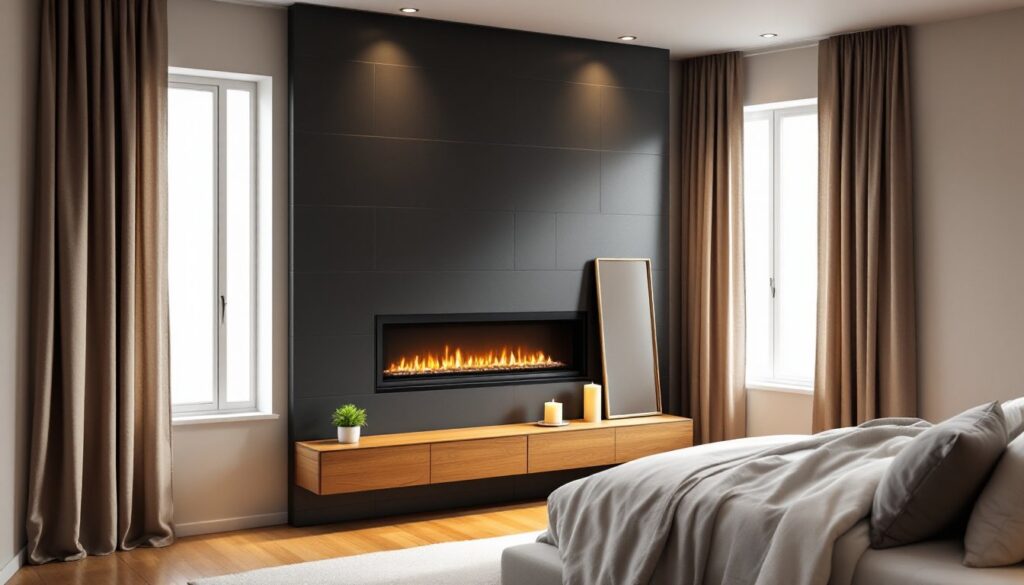
A modern minimalist fireplace strips away ornament and focuses on clean geometry, neutral tones, and materials like polished concrete, steel, or dark tile. These designs work especially well in bedrooms where visual calm is the goal. A simple linear gas fireplace, often set flush into a wall, delivers heat and ambiance without fussy details or protruding mantels.
Consider a frameless wall-mounted electric fireplace inset behind drywall, with a slim black surround and no visible trim. Pair it with a low-profile, floating media console or leave the wall bare for maximum restraint. Lighting is critical: recessed fixtures or a subtle LED strip around the fireplace opening enhance the streamlined effect.
Installation varies by fireplace type. Gas units require venting (either direct-vent through an exterior wall or a B-vent chimney), while electric models need only a standard wall outlet and drywall cutout. Both are feasible for experienced DIYers, though gas installations often benefit from a licensed HVAC or gas technician to ensure code compliance. Most building codes require minimum clearances (typically 3 inches from combustibles for gas units), so verify local IRC requirements before framing.
Rustic Stone and Wood Accents
Rustic fireplaces invite warmth and texture, think stacked stone, timber mantels, and earthy finishes. A dry-stacked slate or limestone surround creates visual weight and authenticity without requiring mortar (though grouted stone is more durable and code-approved for active fireplaces). Pair it with a reclaimed timber mantel, which lends character and provides shelf space for decor.
The key to pulling this off is material sourcing and surface prep. Real stone demands a stable backing wall (studs on 16-inch centers minimum) and proper flashing if the fireplace is gas-powered and vented. Veneer stone, real thin-cut stone adhered to cement board, is lighter and easier to install than full-depth masonry but still looks authentic. Wood mantels must be set at least 12 inches from any unprotected combustibles and 18 inches if the fireplace opening is directly below. Always use kiln-dried lumber to prevent warping from heat cycles.
For DIYers, stone veneer installation involves the same process as large-format tile: cement board substrate, modified thin-set mortar, grout, and sealing. Wood mantels are simpler, secure them with heavy-duty brackets or a ledger board. But, if you’re retrofitting a masonry chimney with a gas insert, a contractor familiar with local codes is worth the investment.
Electric and Gas Fireplace Options
Choosing Between Electric and Gas
Electric fireplaces are the quickest path to a cozy bedroom fire if you want to avoid venting, gas lines, and complex installations. Modern units, like insert models that sit inside a recessed surround or freestanding units, produce realistic flame effects and adjustable heat output (typically 750–1,500 watts, equivalent to a space heater). They’re perfect for renters or homeowners hesitant about permanent installation.
Gas fireplaces deliver superior ambiance and can serve as a primary heat source, though they require either a direct-vent pipe through an exterior wall, a B-vent (natural draft) chimney, or connection to an existing chimney. Natural gas units need a gas line run to the unit (a job for a licensed plumber or gas fitter), while propane models use a tank. Ventless gas fireplaces exist but are restricted or banned in some states and jurisdictions due to air quality concerns, check your local fire code before considering one.
Cost-wise, a quality electric insert runs $500–$2,000 installed: a gas insert adds $2,000–$5,000+ depending on venting complexity. Electric units are more DIY-friendly: gas installations benefit from professional help. Also consider operating costs: electric heat is generally cheaper per BTU in cooler climates, while gas fireplaces are economical in regions with low utility rates.
Fireplace Mantels and Styling Tips
A mantel, whether attached to a traditional chimney or a modern surround, becomes prime real estate for decor. The rule of thumb is restraint: too many objects create visual clutter in a bedroom meant for rest. A curated arrangement (three to five items) works better than a full shelf.
Consider asymmetrical placement of a tall mirror or artwork above the mantel, flanked by a simple candle, a small plant, or decorative object. Stagger heights and avoid matching pairs unless you’re going for strict symmetry. Wood mantels show off natural grain: paint or stain them to echo your bedroom’s color palette. Stone or concrete mantels stay neutral and let decor shine.
Lighting above the mantel, recessed fixtures or a plug-in picture light, highlights the arrangement and the fireplace itself. Heavy, draped curtains on either side of a fireplace (if windows allow) frame it beautifully. Designers at interior design platforms often feature bedrooms where a mantel is styled with simple textiles, a framed mirror, and ambient lighting, no chaos, just intentional warmth. For practical storage, consider shelving on the wall above or beside the fireplace instead of piling everything on the mantel.
Budget-Friendly Alternatives
If a full fireplace install isn’t feasible, several alternatives create the same cozy effect. A faux fireplace surround made from peel-and-stick wallpaper or painted mural (paired with a plug-in electric heater tucked beneath) costs under $200 and works as a temporary solution or rental-friendly option.
Another approach: Build a simple surround from shiplap or wood paneling around an electric insert. This is a 1-2 day DIY project, frame out the opening with 2×4s, add shiplap or board-and-batten siding, paint, and slide in the electric unit. Total material cost runs $300–$800 depending on finishes. Resources like home design inspiration sites showcase budget bedroom makeovers using this exact method.
For maximum savings, a freestanding electric fireplace stove (styled like a vintage wood-burning unit) needs no installation, just plug it in and position it in a corner or against a wall. These units run $200–$600 and are especially useful if you move or rent. Finally, if you have an existing but non-functional fireplace, a gas or electric insert breathes new life into it without the cost of a full rebuild. Consult a chimney inspector to ensure your existing structure is sound before investing in an insert.
Conclusion
A master bedroom fireplace, whether minimalist or rustic, electric or gas, turns a bedroom into a personal retreat. Start by assessing your space, budget, and local codes, then pick a style that matches your aesthetic. Simple mantels, thoughtful lighting, and restrained decor elevate the effect. Whether you’re ready for a full build or exploring faux options, the right fireplace brings warmth and focus to your most private room.