Table of Contents
ToggleAn outdoor patio rug does far more than add a pop of color to your deck or patio, it anchors your outdoor living space, defines seating areas, and protects your flooring from wear and weather. Whether you’re working with a sprawling backyard or a modest balcony, the right rug can transform how your outdoor space feels and functions. In 2026, outdoor patio rugs come in materials and styles built to handle everything from intense sun to seasonal moisture, making it easier than ever to create a cohesive outdoor room that complements your home’s aesthetic. Let’s walk through the essentials of choosing, sizing, and styling an outdoor rug that works for your space and lifestyle.
Key Takeaways
- Outdoor patio rug ideas should prioritize durability by choosing solution-dyed polypropylene or polyester, which resist fading for 3–5 years and handle UV exposure far better than budget synthetic alternatives.
- An outdoor patio rug anchors your space by defining seating zones, protecting flooring from wear, and tying together your décor—making a bare patio feel intentional and cohesive.
- Size your rug to fit your furniture layout, not your patio’s boundaries; dining rugs should extend 2–3 feet beyond the table, while seating clusters need all legs on the rug for a unified floating effect.
- Color choice sets the mood: warm tones create intimate spaces, cool tones evoke calm, and neutrals offer flexibility, while bold patterns work best when proportional and echo existing plants or cushion colors.
- Regular maintenance—rinsing monthly, spot-cleaning spills, and storing indoors in winter—extends a mid-range outdoor rug’s life and prevents mildew or freeze-thaw damage in harsh climates.
- Match your outdoor rug style to your home’s exterior: Craftsman homes pair with earthy tones, modern houses suit clean patterns, and traditional colonials work beautifully with classic stripes or subtle geometric designs.
Why Outdoor Patio Rugs Matter for Your Backyard Design
An outdoor patio rug serves three critical functions: it defines zones, protects surfaces, and ties your outdoor décor together. Without a rug, a patio can feel disconnected and barren, think of it as the foundation of outdoor furniture placement and visual balance.
When you place a rug under your dining set or seating cluster, you’re essentially creating a “room” within your larger yard. This visual boundary makes the space feel intentional and inhabited, rather than just scattered furniture on concrete or wood. The rug also protects your patio surface from direct foot traffic, spills, and UV fading.
Design-wise, an outdoor rug pulls together colors and patterns from your cushions, planters, and home’s exterior. It’s the glue between your house and your landscape. A well-chosen rug signals that your outdoor space is as thoughtfully designed as your living room, because it should be. Most families spend serious time outside during warmer months, so investing in quality décor pays dividends in comfort and enjoyment.
Popular Outdoor Rug Materials and Durability
Choosing the right material is non-negotiable for outdoor rugs. Unlike indoor rugs, outdoor versions face relentless sun, moisture, temperature swings, and foot traffic. The wrong material will fade, mildew, or rot within a season or two.
The most durable outdoor rug materials include polypropylene (synthetic fiber resistant to fading and moisture), polyester blends (soft feel, good color retention), jute and sisal (natural fibers best for covered patios), and solution-dyed synthetics that resist color loss at the fiber level rather than as a surface treatment.
Polypropylene rugs are the workhorses of outdoor spaces. They’re affordable, lightweight, and almost impossible to kill. They don’t mildew easily and handle foot traffic well. The trade-off is they’re not as soft underfoot as wool or premium synthetics.
Solution-dyed polypropylene and polyester are premium versions. The pigment is locked into the fiber during manufacturing, so fading takes years instead of months. If durability is your top concern, this is where to focus your budget.
Jute and sisal rugs bring warmth and texture but require protection. Use them only under covered patios or pergolas where rain doesn’t soak them regularly. They work beautifully in Mediterranean or bohemian designs but need more care than synthetics.
Weather-Resistant Options That Last
Outdoor-rated polypropylene and polyester from manufacturers using solution-dyed processes hold up best against UV exposure. They maintain color integrity through 3–5 years of heavy sun exposure, while budget synthetics may show fading within 12–18 months.
Standard care extends life: rinse with a garden hose monthly, spot-clean spills immediately, and let the rug dry fully before rolling or stacking. If your area gets heavy snow or ice, store the rug indoors during winter to avoid fiber damage from freeze-thaw cycles.
For maximum durability in harsh climates, look for rugs labeled “fade resistant” and “mold/mildew resistant.” Avoid cheap polyester blends or untreated natural fibers in wet, humid regions. The investment in a mid-range, solution-dyed rug ($150–$400 for a 5’×8′) beats replacing a budget rug every summer.
Color and Pattern Ideas to Match Your Style
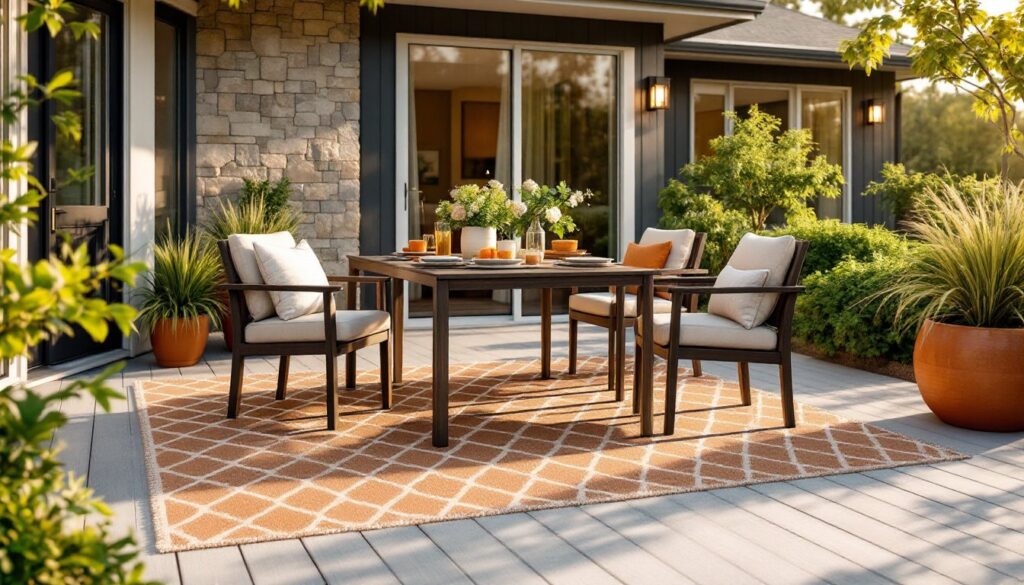
Color choice sets the mood for your entire outdoor room. Warm tones (terracotta, ochre, cream) create intimate, inviting spaces. Cool tones (blues, grays, greens) evoke calm and work well in contemporary designs. Neutrals (beige, taupe, charcoal) pair with almost anything and let your plants and furniture shine.
Patterns add personality without overwhelming. Geometric designs feel modern: stripes add sophistication: botanical prints bring natural energy. The key is balance, if your patio furniture has busy cushion patterns, choose a solid or lightly textured rug. If your space is minimal, a bold pattern rug becomes the anchor piece.
Consider your home’s exterior color and style. A Craftsman-style home with warm wood siding pairs beautifully with earthy rug tones. A modern house with metal and stone calls for cleaner patterns or solid colors. A traditional colonial works with classic stripes or subtle geometric designs.
Neutral Tones Versus Bold Designs
Neutral rugs (cream, gray, taupe, charcoal) are foolproof. They hide dirt and wear, pair with any furniture style, and feel timeless. If you like to rotate décor seasonally or aren’t sure about your design direction, a neutral rug buys you flexibility. Neutral doesn’t mean boring, texture (a chunky weave, a subtle pattern) keeps it interesting.
Bold rugs make a statement. A terracotta or deep blue rug immediately establishes character and draws the eye. Use them when you have a clear vision for your space and confidence in your color palette. Bold works especially well if the rug’s colors echo plants, planters, or cushion colors already in your yard. The trick is proportion: a bold small rug can look confused, but a bold 6’×9′ rug commanding a seating area feels intentional and sophisticated. Sources like Gardenista and Sunset showcase inspiring outdoor spaces that combine bold rug colors with complementary plant selections and furniture choices.
Size and Layout Tips for Maximum Impact
Size matters more than most homeowners realize. A rug that’s too small looks timid and doesn’t anchor the space. A rug that’s too large swallows the patio or looks out of proportion.
For a dining set, the rug should extend at least 2–3 feet beyond the table in all directions. When people sit at the table, their chairs’ legs should land on the rug. A standard 5’×8′ rug works for most 4–6 person dining sets on a deck or patio. Larger gatherings (8+ people) benefit from a 6’×9′ or even 8’×10′ rug.
For a seating conversation cluster, the rug should fit the entire arrangement, ideally all furniture legs land on it, creating a unified “floating” area. If you have a 10’×12′ patio and one 2-person sofa with two chairs, an 8’×10′ rug is too much: a 5’×7′ or 6’×8′ suits the space better.
For a small patio or balcony, a 3’×5′ or 4’×6′ rug defines the space without crowding it. In tight quarters, the rug should take up about 50–60% of the patio’s total area.
Measure your patio’s usable space before ordering. Account for sightlines, you want to see the rug’s edges from inside your home, not have it hidden by the house. Test placement by laying a bedsheet down if you’re unsure. It sounds silly, but it prevents expensive mistakes.
Consider mobile home backyard ideas if you’re working with a compact outdoor space, as scaled-down layouts and proportional rugs are essential in tight quarters. Regional inspiration from Southern Living offers excellent examples of properly scaled outdoor rugs in various patio configurations.
Conclusion
An outdoor patio rug transforms a bare slab or deck into an intentional outdoor room. Focus on durable materials suited to your climate, choose colors and patterns that complement your home, and size the rug to fit your furniture layout, not your patio’s boundaries. A thoughtfully chosen rug elevates comfort, protects your flooring, and makes every gathering outdoors feel polished and complete.